
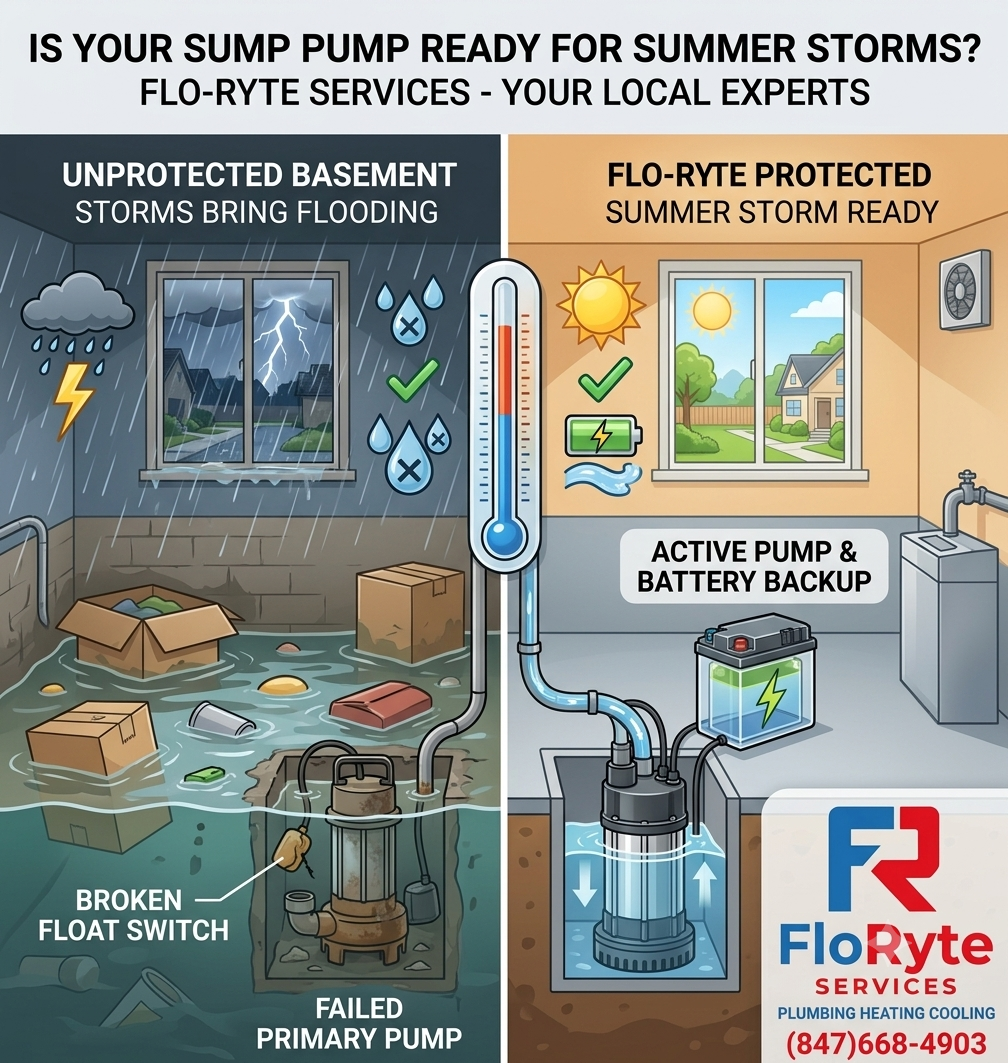
Is Your Sump Pump Ready for Summer Storms?
When summer rolls into the Midwest, it brings more than just warm weather and sunshine. For homeowners in Northern Illinois, summer also means the arrival of severe thunderstorms, torrential downpours, and the very real threat of basement flooding.
Your home's first line of defense against these sudden deluges is your sump pump. But because this crucial piece of equipment sits silently in a basement pit for most of the year, it’s easy to forget about—until it’s too late.
At FloRyte Services, we frequently receive emergency calls from homeowners dealing with water damage that could have been easily prevented. Here is your essential guide to ensuring your sump pump is ready to handle whatever the summer storm season throws your way.
Why Summer Storms Overwhelm Basements
Spring thaws are notorious for causing leaks, but summer storms present a unique challenge. Flash floods dump massive amounts of water onto the ground in a very short period. The parched summer soil often can't absorb the water fast enough, leading to rapid runoff that pools around your home’s foundation and pours into your sump pit. If your pump isn't operating at 100% capacity, water will quickly back up into your finished basement.
A Quick 4-Step Sump Pump Health Check
Don't wait for the thunder to start rolling to find out if your system works. Perform this quick maintenance check today:
1. Check the Power: Ensure the pump is plugged directly into a working ground fault circuit interrupter (GFCI) outlet. The cord should be in good condition, and the outlet shouldn't be tripped.
2. Clear the Pit: Remove the cover and inspect the sump pit. Remove any debris, mud, or small objects that could jam the impeller or interfere with the float switch.
3. Run a Water Test: Pour a 5-gallon bucket of water directly into the sump pit. The water level should raise the float switch, turning the pump on. Watch to ensure the water is actually being pumped out quickly and that the pump turns off smoothly once the water level drops.
4. Inspect the Discharge Pipe: Go outside and check where the water exits your home. The pipe should direct water at least 10 to 20 feet away from your foundation to prevent it from cycling right back into your basement.
The Ultimate Protection: Battery Backup Systems
The biggest flaw of a standard sump pump is that it relies on your home’s electrical grid. Summer storms frequently knock out power—leaving your basement completely unprotected right when you need your pump the most.
Installing a battery backup sump pump system is the single best investment you can make for your peace of mind. These systems automatically kick in the moment the power goes out or if your primary pump fails due to mechanical issues. Check out our Sump Pump Services page to learn more about how we can safeguard your lower level.
Signs It’s Time for a Replacement
Sump pumps don't last forever. Even with proper maintenance, a standard unit typically has a lifespan of 7 to 10 years. You should consider calling a professional for a replacement if you notice:
Strange Noises: Grinding or rattling sounds indicate failing motor bearings or a jammed impeller.
Constant Running: If the pump won't shut off, the float switch may be broken, or the pump may be underpowered for the volume of water entering your home.
Frequent Cycling: Turning on and off rapidly can burn out the motor prematurely.
Secure Your Basement with FloRyte Services
Don't gamble with your home's foundation this summer. If you aren't confident in your current setup, the licensed plumbing experts at FloRyte Services are here to help.
Contact FloRyte Services today at (847) 276-2297 to schedule your sump pump evaluation before the next big storm hits!
Proudly providing expert plumbing and HVAC solutions across Northern Illinois (Lake & McHenry Counties)