What Causes Low Water Pressure In Your Home?
Few things are more frustrating than turning on the shower expecting a powerful, refreshing stream, only to get a weak, disappointing trickle. Low water pressure can turn simple daily tasks—like rinsing dishes, washing your hair, or running a load of laundry—into painfully slow chores.
While a sudden drop in water pressure is incredibly annoying, it is actually a very helpful warning sign from your plumbing system. It tells you that something is restricting the flow of water somewhere between the municipal water main and your faucet.
At FloRyte Services, we help homeowners across Northern Illinois and Southern Wisconsin diagnose and resolve water pressure issues every day. Here are the most common culprits behind low water pressure and what you can do about them.
1. Mineral Buildup from Hard Water
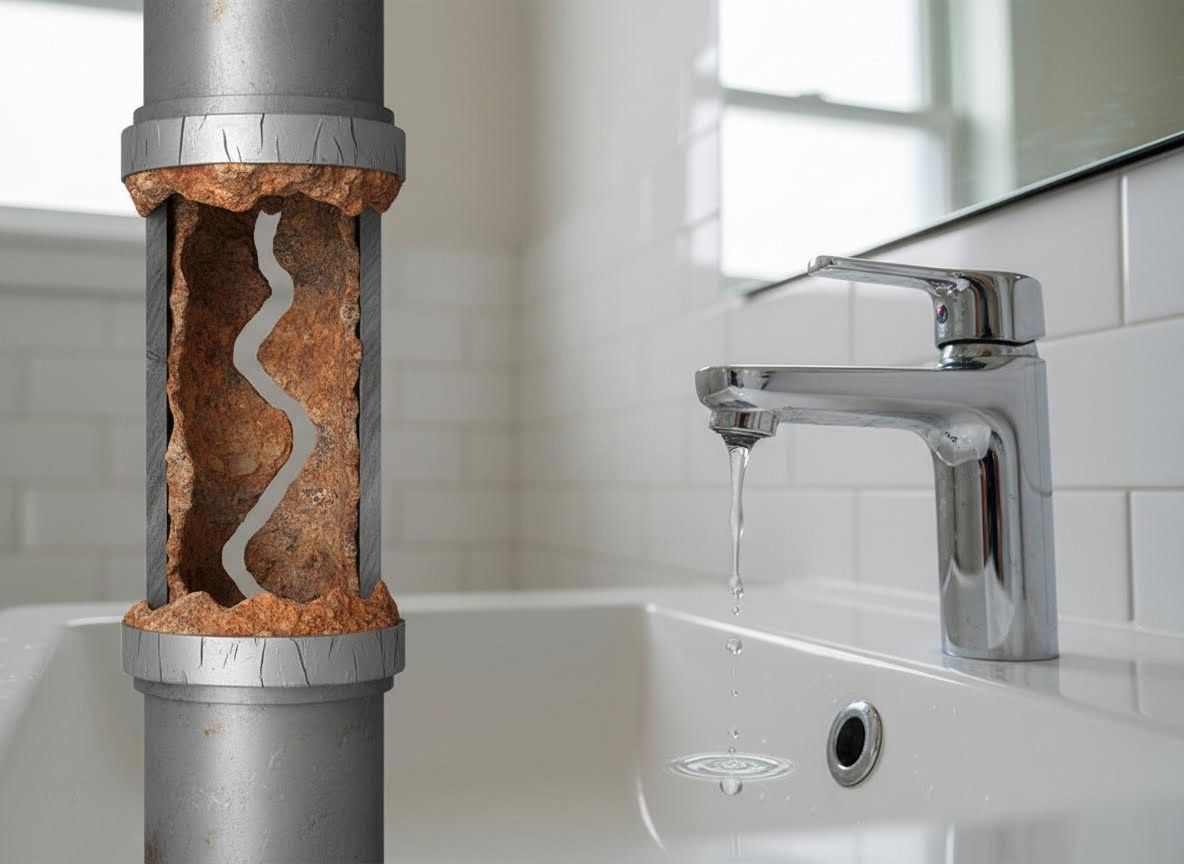
If you live in our corner of the Midwest, you are likely no stranger to hard water. Over time, the heavy minerals (calcium and magnesium) dissolved in your water supply attach to the inside of your pipes. This mineral scale slowly builds up, narrowing the pathway that water can travel through. Think of it like a clogged artery in your plumbing system—the narrower the pipe gets, the lower your water pressure becomes.
The Fix: A professional plumbing inspection can determine if your pipes need clearing or if it's time to invest in a water softener installation to stop the buildup completely.
2. The Main Shut-Off Valve is Partially Closed
If you recently had plumbing work done, or if someone was playing around in your utility closet, your main water shut-off valve might have been turned. Even if the valve is only slightly closed, it can significantly restrict the volume of water entering your home, resulting in a system-wide drop in pressure.
The Fix: Locate your main water shut-off valve (usually found near the water meter or where the main line enters the basement). Ensure the valve handle is completely turned to the open position.
3. A Faulty Pressure Regulator (PRV)
Many homes are equipped with a Pressure Reducing Valve (PRV). This device regulates the high-pressure water coming from the city street down to a safe, manageable level for your residential pipes (typically between 45 and 60 PSI). When a pressure regulator begins to fail, it can either spike your pressure dangerously high or grip too tight, causing your home's water pressure to plummet.
The Fix: Replacing a faulty PRV requires precise calibration to protect your appliances and fixtures. This job is best left to a licensed professional plumber.
4. Corroded Galvanized Steel Pipes
If you live in an older, historic home in Lake or McHenry county, you might still have galvanized steel pipes. While durable, these older pipes are highly susceptible to internal rusting and corrosion. As the rust expands inside the pipe, it creates a massive restriction on water flow and can even flake off, clogging your faucet aerators.
The Fix: Corroded galvanized lines eventually need to be replaced with modern copper or PEX piping to restore clean, high-pressure water to your home.
5. A Hidden Water Leak
If your water pressure dropped suddenly and stays low, you could be dealing with a hidden plumbing leak. When a pipe cracks or a joint breaks behind a wall or beneath your foundation, water escapes out of the system. Because water is taking the path of least resistance through the leak, there isn't enough pressure left to push it forcefully out of your faucets.
The Fix: Check your water meter when no fixtures are running. If the meter dials are spinning, you have a leak. Shut off your water immediately and call for professional leak detection.
6. Clogged Faucet Aerators
Is the low water pressure only happening at one specific sink or showerhead? If so, the issue isn't your whole plumbing system—it’s just that specific fixture. Small mesh screens called aerators sit at the tip of your faucets to shape the water stream. Over time, rust flakes, sand, and mineral deposits can clog these tiny screens.
The Fix: Unscrew the aerator from the faucet tip, soak it in vinegar overnight to dissolve the mineral crust, rinse it out, and screw it back on.
Restore Your Flow with FloRyte Services
You don't have to suffer through weak showers and slow-filling appliances. Whether your low pressure is caused by a simple clogged fixture or a complex underground line problem, the licensed plumbing experts at FloRyte Services are ready to help. We have the diagnostic tools and experience to trace the root of the problem and provide transparent, upfront pricing for the repair.
Get your water pressure back to peak performance! Contact FloRyte Services today at (847) 276-2297 to schedule an inspection with your local plumbing and HVAC professionals.
Proudly serving clients across Northern Illinois (Lake & McHenry Counties)